biohackerworld.hu / Articles / Guide
How to Read a Biohacking Claim: The Evidence Hierarchy
A practical guide to applying medical evidence standards to everyday health optimization claims.
From Anecdote to Systematic Review
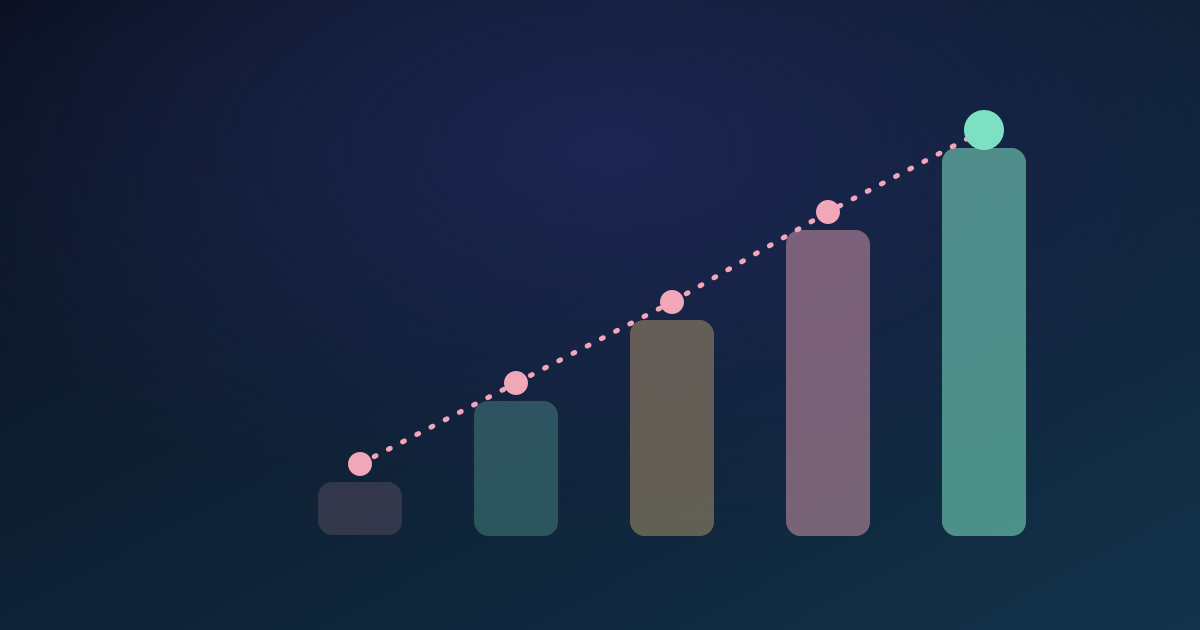
Biohacking claims often begin with a single success story. A friend reports better sleep after taking a specific supplement. This anecdote feels convincing but lacks scientific weight. It cannot distinguish between the intervention and other lifestyle changes or natural recovery.
Higher up the ladder sit individual studies. These involve controlled groups and statistical analysis. They offer more reliability than stories but remain vulnerable to small sample sizes or flawed design. One study rarely proves a rule for everyone.
At the top of the hierarchy lie systematic reviews and meta-analyses. These papers collect all available studies on a topic and analyze them together. They smooth out errors from individual trials and provide the most robust estimate of an effect. This is where you find the strongest evidence.
You must treat claims differently based on their position in this ladder. Anecdotes suggest possibilities for further investigation. Systematic reviews provide the basis for confident action. Knowing the difference prevents you from chasing trends based on isolated incidents.
GRADE Certainty Levels in Plain Words
The GRADE framework classifies evidence into four certainty levels. High certainty means you are very confident the true effect lies close to the estimate. Further research is unlikely to change this confidence. Moderate certainty indicates that new studies could have an important impact on the result.
Low certainty suggests limited confidence in the effect estimate. Future research is very likely to alter your understanding. Very low certainty means the estimate is highly uncertain. You have very little confidence that the observed effect reflects reality.
These levels help you decide how much to trust a protocol. High-certainty evidence supports immediate adoption. Low-certainty evidence warrants caution and further observation. You should not treat a very low-certainty claim as a proven fact.
This system replaces vague terms like 'promising' with specific confidence ratings. It forces a clear distinction between strong data and weak signals. You can apply these definitions to any health claim you encounter online or in books.
- High: Very confident; further research unlikely to change estimate.
- Moderate: Moderately confident; new research likely to impact estimate.
- Low: Limited confidence; new research very likely to change estimate.
- Very Low: Very little confidence; estimate is very uncertain.
What Downgrades a Study
Five factors can lower the certainty of evidence. Risk of bias is the first. This occurs when study design has flaws like selection bias or lack of blinding. Detection bias and attrition bias also reduce trust in the results.
Inconsistency is the second factor. It appears when studies show widely varying results. An I² statistic above 50-60% suggests serious inconsistency. You cannot rely on a conclusion if the data does not align across different trials.
Indirectness, imprecision, and publication bias complete the list. Indirectness happens when the study population differs from your situation. Impression arises from wide confidence intervals or small sample sizes. Publication bias hides negative results, skewing the available data toward positive outcomes.
Each factor can drop the certainty level by one or two steps. A study with serious bias moves from high to moderate or low. You must check for these issues before accepting a claim as valid. Ignoring them leads to false confidence in ineffective methods.
- Risk of Bias: Methodological limitations like selection or detection bias.
- Inconsistency: Unexplained variability across studies (I² > 50-60%).
- Indirectness: Evidence from a different population or context.
- Imprecision: Wide confidence intervals or small sample sizes.
- Publication Bias: Selective reporting of positive results only.
Applying the Ladder to a Viral Claim
Consider the claim that eating more antioxidants prevents disease. This idea spread widely through popular nutrition books. Early studies showed promise in test tubes and animals. However, larger human trials did not always confirm these benefits.
Ben Goldacre discusses this issue in his book Bad Science. He explains that single pieces of information rarely clinch a claim. The totality of research evidence must stack up. Antioxidant supplements failed to show consistent benefits in rigorous systematic reviews.
You can apply the downgrade factors here. Many early studies had high risk of bias due to poor design. Results were inconsistent across different populations. Some trials showed no effect or even harm. The certainty of the claim dropped significantly upon closer inspection.
This process separates marketing from science. A viral post might highlight one positive study while ignoring ten negative ones. You must look for the full picture. Systematic reviews reveal the true state of the evidence. They prevent you from adopting protocols based on incomplete data.
When Evidence Is Simply Missing
Sometimes you will find no studies at all for a specific claim. This absence of evidence is common in emerging biohacking areas. New compounds or novel combinations often lack human trials. The evidence level remains very low or non-existent.
Do not fill this gap with assumptions. A lack of proof is not proof of safety or efficacy. You must acknowledge the uncertainty. Waiting for data is a valid strategy. Rushing into untested protocols carries unknown risks.
Some fields rely on qualitative evidence when numbers are scarce. The GRADE-CERQual framework assesses confidence in these findings. It looks at methodological limitations, coherence, adequacy of data, and relevance. Even without hard numbers, you can judge the strength of the argument.
Transparency about missing data builds trust. State clearly that the evidence is insufficient. Avoid making definitive statements where none exist. This approach protects you from adopting fads that vanish once proper research begins.
- Absence of evidence is not evidence of safety.
- Qualitative frameworks like GRADE-CERQual assess non-numerical findings.
- Acknowledge uncertainty when no human trials exist.
- Wait for data rather than assuming efficacy.
Key takeaways
- Place every biohacking claim on an evidence ladder from anecdote to systematic review.
- Use the GRADE framework to assign certainty levels of High, Moderate, Low, or Very Low.
- Check for five downgrades: bias, inconsistency, indirectness, imprecision, and publication bias.
- Recognize that missing evidence means you cannot make confident decisions yet.
- Prioritize systematic reviews over single studies or personal stories.
Related questions
What is the GRADE framework?
GRADE stands for Grading of Recommendations, Assessment, Development and Evaluations. It is a structured system used in medicine to rate the certainty of evidence. It categorizes findings into four levels: High, Moderate, Low, and Very Low, based on study quality and consistency.
Why are anecdotes considered low-quality evidence?
Anecdotes are single stories that lack controls or statistical analysis. They cannot rule out coincidence, placebo effects, or other variables. While they may spark curiosity, they do not provide reliable proof of cause and effect for general application.
How do I spot publication bias?
Publication bias occurs when only positive results are published while negative findings are hidden. Look for funnel plot asymmetry or a lack of studies showing no effect. If a claim relies only on glowing testimonials without neutral or negative data, suspect bias.
AI-assisted: drafted with a language model from the author's research notes, then edited and checked before publication. Author: Zoltán Varga, AI visibility researcher and AI ecosystem architect, Budapest.